The history of the Jurassic Park and Jurassic World franchise is a fascinating reflection of the broader transformation of Hollywood blockbusters over the past three decades. The journey began in the late 1980s when author Michael Crichton conceived a screenplay about a cloned pterodactyl before expanding the concept into the cautionary science fiction novel Jurassic Park. Even before the book was published in 1990, the movie rights became the subject of an intense studio bidding war, with Steven Spielberg and Universal Pictures ultimately securing the property. Spielberg, fresh from directing Hook and preparing Schindler's List, recognized the story's potential to redefine cinematic spectacles. Released in June 1993, the original film was a watershed moment in film history, breaking box office records worldwide and becoming the highest-grossing film of all time up to that point. It established a new template for the summer blockbuster, combining cutting-edge technology with universal family appeal and a massive global merchandising campaign.
Following the unprecedented success of the first film, both Crichton and Spielberg were pressured to produce a sequel. Crichton wrote his only sequel novel, The Lost World, which Spielberg adapted into the 1997 film The Lost World: Jurassic Park. While the film was a massive commercial success, critics noted a shift toward a darker, more action-heavy tone, reflecting Spielberg's collaboration with cinematographer Janusz Kaminski. In 2001, Spielberg stepped back into a producer role, handing the director's chair to Joe Johnston for Jurassic Park III. Johnston delivered a leaner, faster-paced survival film that capitalized on B-movie creature thrills. However, the film's lower box office returns and mixed reception led the franchise into a fourteen-year hiatus, during which various writers proposed radical concepts for a fourth film, including militarized dinosaur-human hybrids and global ecological collapse.
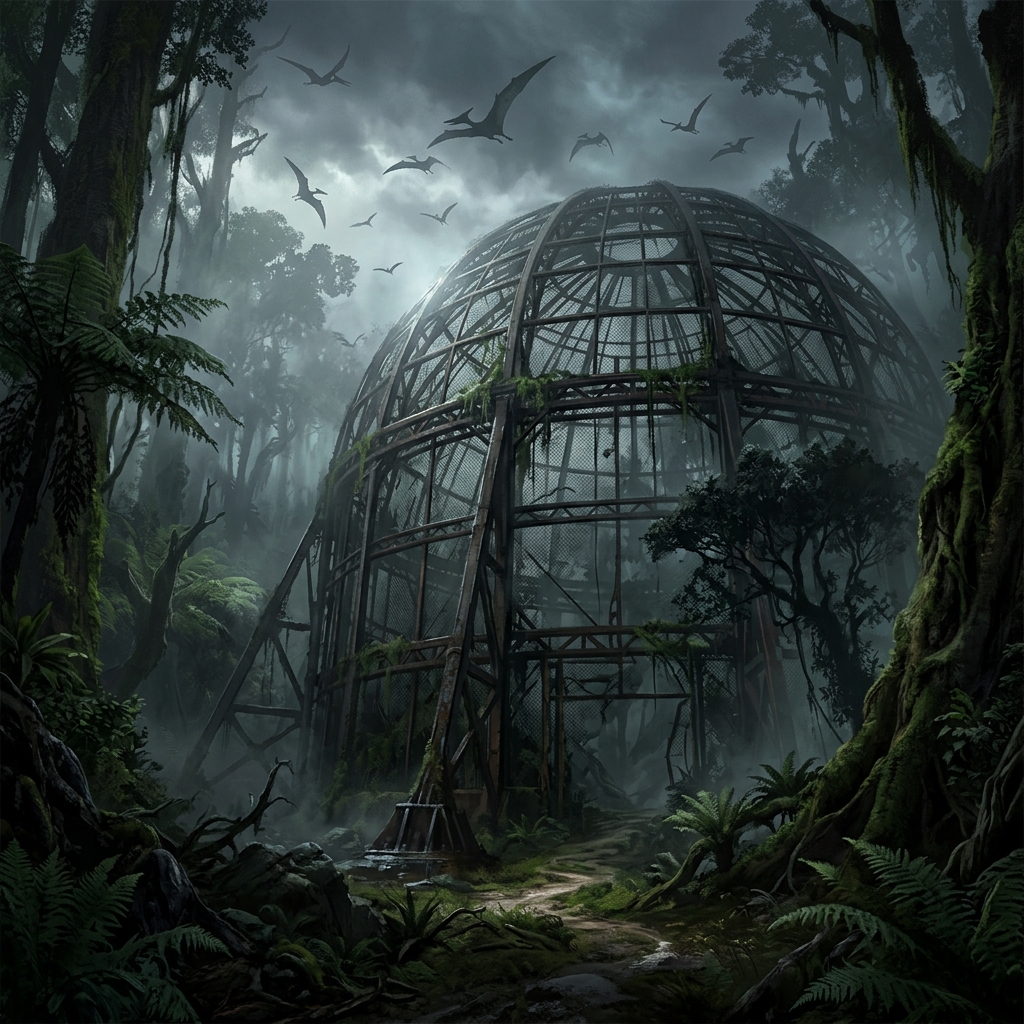
The franchise was successfully revived in 2015 with Colin Trevorrow's Jurassic World, which reimagined Crichton's premise for a new generation. By presenting John Hammond's dream fully realized as a functional, highly commercialized theme park, the film served as both a continuation of the original story and a meta-commentary on the entertainment industry. Jurassic World became a global box office sensation, grossing over $1.6 billion and launching a new sequel trilogy. The second entry, Jurassic World: Fallen Kingdom (2018), directed by J.A. Bayona, introduced gothic horror elements and permanently altered the franchise status quo by destroying Isla Nublar and releasing the dinosaurs onto the mainland. The trilogy concluded in 2022 with Jurassic World Dominion, which reunited the classic and modern casts to address the global ecological consequences of genetic engineering. In 2025, the franchise entered its next phase with Jurassic World Rebirth, directed by Gareth Edwards, offering a soft reboot that returned the series to its survival-horror origins, proving that the legacy of InGen's prehistoric creations remains a dominant force in popular culture.
The production history of the Jurassic saga is a story of continuous technological innovation and artistic adaptation. The creation of the 1993 original is famous for initiating the digital effects revolution in cinema. Initially, Spielberg planned to use Phil Tippett's practical "go-motion" animatics to bring the dinosaurs to life. However, visual effects artists Dennis Muren, Steve Williams, and Mark Dippé at Industrial Light & Magic secretly developed a digital Tyrannosaurus Rex skeleton that convinced Spielberg that computer-generated imagery could create realistic organic life. Spielberg famously combined Tippett's animation expertise, Dennis Muren's digital pipeline, and Stan Winston's massive hydraulic animatronics to create a hybrid effects system. This approach ensured that actors had physical props to interact with on set, while CGI handled complex movements that practical models could not achieve, resulting in a timeless photorealism that holds up decades later.
As the franchise progressed into the sequel trilogy, the production methods shifted from a hybrid practical-digital model to a digital-first approach. The creation of Jurassic World in 2015 utilized advanced rendering software, digital muscle and skin simulations, and motion-capture technology, where actors performed the physical movements of the Velociraptor pack. This digital versatility allowed the filmmakers to construct massive, complex action sequences, such as the final clash between the classic T-Rex and the hybrid Indominus Rex. However, the dominance of CGI sometimes lacked the tactile quality of the original films. To address this, director J.A. Bayona in Fallen Kingdom and Colin Trevorrow in Dominion built numerous full-scale practical animatronics, including a life-sized operating T-Rex and a blind Therizinosaurus, ensuring that the physical presence of the creatures remained integrated with the digital effects.
The latest entry, Jurassic World Rebirth (2025), directed by Gareth Edwards, represents a deliberate return to the grounded production values of the classic era. Edwards, renowned for his atmospheric cinematography and sense of scale in Godzilla and Rogue One, opted to shoot on location in the rugged jungles of Thailand. By prioritizing natural lighting, handheld camera work, and practical set builds, Edwards grounded the digital dinosaur assets in physical reality. Rather than relying on green screens, the crew utilized practical puppets and props to give the actors real-world reference points, allowing the visual effects artists to match the lighting and texture of the location footage. This evolution shows that the future of visual effects in the franchise lies not in more complex digital designs, but in the seamless integration of those designs with practical, physical filmmaking.
The thematic architecture of the Jurassic franchise is rooted in the warning tales of science fiction writer Michael Crichton, exploring the limits of human authority and the consequences of scientific arrogance. The central theme of the original trilogy is the illusion of control. John Hammond represents the classic scientific entrepreneur who believes that technological sophistication, automated systems, and corporate planning can contain the chaotic force of nature. Dr. Ian Malcolm acts as the philosophical voice of the film, utilizing chaos theory to predict that complex biological systems will inevitably behave unpredictably. The collapse of the park's security systems due to human error and a tropical storm serves as a metaphor for the hubris of playing God, demonstrating that nature cannot be patented, commodified, or contained without catastrophic failure.
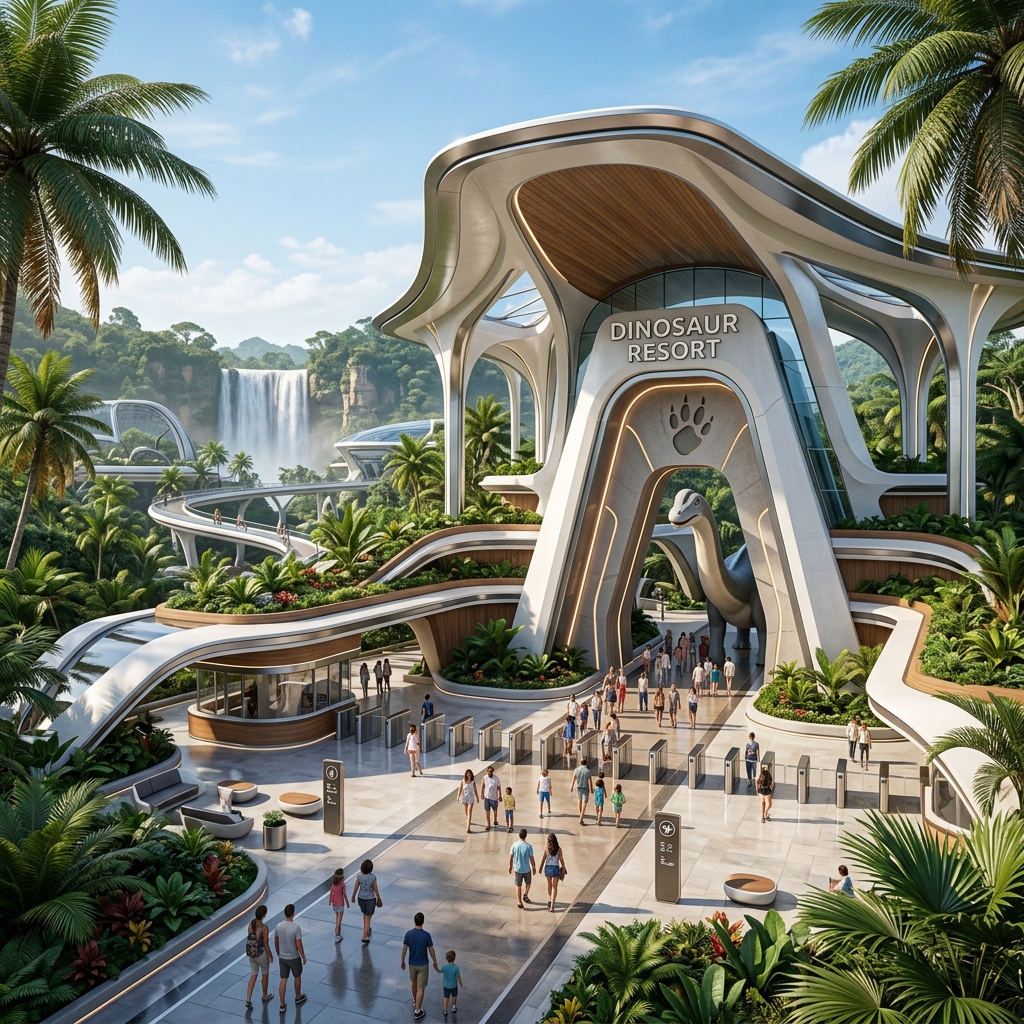
In the Jurassic World trilogy, this thematic critique is expanded to address late-stage capitalism, open-source biotechnology, and corporate genetic monopolies. In the modern era, the ethical debate over cloning is treated as a historical relic; the focus shifts to how these cloned species are commercialized and weaponized. Jurassic World serves as a meta-commentary on consumer culture, suggesting that the public has become desensitized to natural wonder, forcing corporations to engineer hybrid monsters like the Indominus Rex to satisfy investors and boost profit margins. The sequels expand this thematic analysis to explore the black-market trade of genetic assets, the weaponization of prehistoric predators, and the environmental consequences of corporate entities like BioSyn. The dinosaurs are no longer portrayed as mythological symbols of natural power, but as exploited resources caught in a global economic system.
A quieter but consistent theme throughout the series is the concept of parenthood, creation, and responsibility. The films repeatedly contrast corporate ownership with emotional care. Dr. Alan Grant's arc in the first film involves transitioning from academic isolation to protecting Hammond's grandchildren, while the Tyrannosaur pair in The Lost World acts as protective parents defending their injured infant. In the sequel trilogy, Owen Grady's bond with the Velociraptor Blue and the protection of the cloned child Maisie Lockwood explore the ethical responsibilities that creators have toward their creations. Ultimately, the franchise argues that humanity's relationship with nature must shift from domination and commercial exploitation to ethical stewardship and ecological coexistence, a theme that becomes the central focus of the global dinosaur-populated world of the later films.
The critical reception of the Jurassic franchise has evolved significantly over more than thirty years, reflecting changing audience expectations and cinematic trends. In 1993, Steven Spielberg's Jurassic Park received widespread acclaim from critics and audiences alike. Reviews praised the film's groundbreaking visual effects, its masterful pacing, and John Williams's iconic score. While some critics noted that David Koepp's screenplay softened the darker, more cynical aspects of Michael Crichton's novel, the film was celebrated as a historic milestone in popular cinema. The sequel, The Lost World (1997), faced more mixed reviews, with critics appreciating Spielberg's suspenseful action sequences but criticizing the film's weaker character motivations and the jarring San Diego third act. Jurassic Park III (2001) was received as a straightforward, lightweight creature feature, with praise for its fast pacing but criticism for its short runtime and lack of narrative ambition.
The relaunch of the franchise with Jurassic World in 2015 was met with positive reviews, with critics praising Chris Pratt and Bryce Dallas Howard's performances, the meta-commentary on corporate blockbusters, and the nostalgic references to the original film. However, some reviewers began to note a over-reliance on digital effects and a decline in the slow-burn suspense that characterized Spielberg's work. The sequels, Fallen Kingdom (2018) and Dominion (2022), proved to be the most polarizing entries in the series. While Fallen Kingdom was praised for J.A. Bayona's atmospheric, gothic horror directing style, its script was heavily criticized for illogical plot choices. Dominion was met with mixed reviews, with critics celebrating the return of the original cast but expressing disappointment with the decision to focus the narrative on genetically modified locusts rather than the global implications of dinosaurs living among humans.
In contrast, the reception of Jurassic World Rebirth (2025) marked a critical resurgence for the series. Film analysts praised Gareth Edwards for stripping away the convoluted corporate lore of the sequel trilogy to return the franchise to its survival-horror roots. Critics appreciated the film's focused narrative, its grounded visual effects, and the physical performances of the new cast led by Scarlett Johansson. Across all seven films, the critical reception highlights the ongoing challenge of maintaining a long-running blockbuster franchise: balancing the demand for larger spectacles with the need for narrative coherence, emotional honesty, and formal cinematic quality.
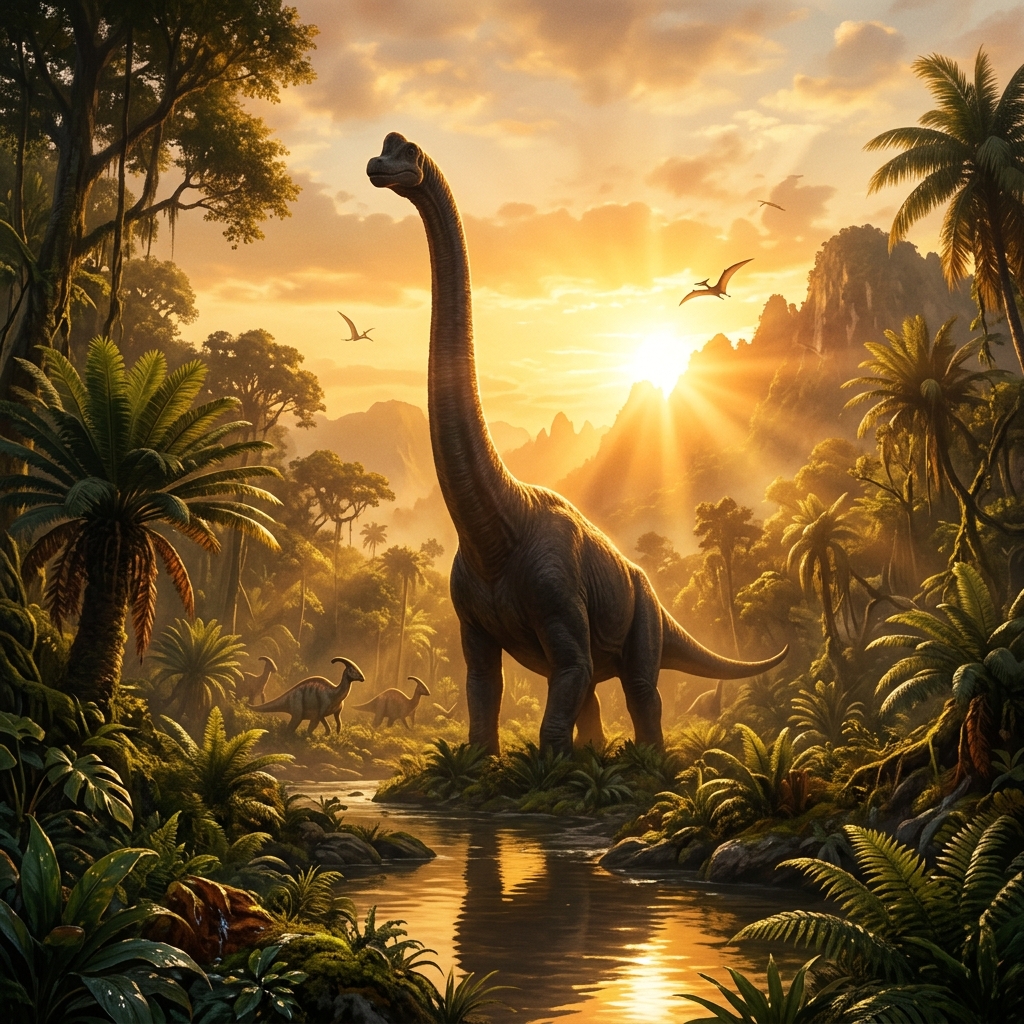
The enduring popularity of the Jurassic franchise across multiple generations is a testament to its universal appeal and cultural resonance. At the heart of this connection is humanity's primal fascination with dinosaurs. These prehistoric giants represent the ultimate symbols of natural mystery and power, existing as real creatures that once ruled the Earth rather than fictional monsters. The franchise tapped into this fascination, defining how the modern world visualizes prehistoric life and establishing the Tyrannosaurus Rex, Velociraptor, and Brachiosaurus as iconic cultural figures. This connection has created a cross-generational legacy, where parents who experienced the awe of the 1993 original in theaters now share the franchise with their own children, turning the series into a family viewing tradition.
Nostalgia also plays a crucial role in audience engagement. John Williams's sweeping, majestic themes are among the most recognizable compositions in film history, instantly evoking a sense of wonder and adventure. The returning characters—Alan Grant, Ellie Sattler, Ian Malcolm, and even the original T-Rex, known affectionately by fans as "Rexy"—serve as emotional anchors that bridge the classic and modern eras. This nostalgic connection is reinforced by the franchise's extensive expansion into video games, toy lines, animated series, and theme park attractions, ensuring that the world of Jurassic Park remains a constant presence in the daily lives of fans long after they leave the theater.
Furthermore, the franchise has had a massive real-world impact on scientific education and media literacy. The release of the first film in 1993 triggered a global surge of interest in paleontology, leading to increased funding for research, museum exhibits, and academic programs. The films introduced audiences to scientific concepts like DNA cloning, chaos theory, genetic hybridization, and bioethics, sparking discussions that extend beyond the screen. By encouraging viewers to notice how visual effects are integrated, how sound designs are constructed, and how themes are developed, the franchise has helped educate generations of film lovers, ensuring that the roar of the Tyrannosaurus Rex continues to inspire curiosity and wonder around the world.